Taliban takeover of Afghanistan
WHAT IS HAPPENING IN AFGHANISTAN?
The Taliban, a militant group that ruled the country in the
late 1990s, have regained control. The US-led invasion of Afghanistan in 2001
drove the insurgents from power, but they never left. After they blitzed across
the country in the past few days, the West-backed government that has run the
country for 20 years has collapsed. Afghans, ran to the airport, one of the
last ways out of the country.
WHY ARE PEOPLE FLEEING THE COUNTRY?
They’re concerned that the country ought to descend into
chaos or the Taliban should perform revenge assaults towards people who worked
with the Americans or the government. Many additionally worry the Taliban will
reimpose the tough interpretation of Islamic law that they relied on once they
ran Afghanistan from 1996 to 2001. Back then, ladies had not been allowed from
attending school or working outside the home. They needed to put on the
all-encompassing burqa and be accompanied by a male family member each time
they went outdoor. The Taliban banned music, cut off the fingers of thieves and
stoned adulterers.
The Taliban have sought to give themselves as a more
moderate force in current years. Since taking over, they've promised to respect
women’s rights, forgive people who fought in opposition to them and prevent
Afghanistan from getting used as a base for terror assaults. But many Afghans
are skeptical of these promises.
Thousands of Afghans rushed at airport, hoping to get away the country due to the fact they are worry what the Taliban’s rule will bring. Some had been so desperate, they clung to the side of a military jet as it took off after which plunged to their deaths. U.S. troops used helicopters to attempt to disperse the crowds and fired warning shots in the air. At least seven humans died in the chaos, U.S. officers said.

WHAT ARE THE TALIBAN’S GOALS?
The Taliban want to reinstate a strict Islamic rule in
Afghanistan and have ruled out elections. They have also declared an amnesty
for laid-off government officials and their security services, and urged former
government employees to return to their jobs. Taliban leaders say they want to focus
on the reconstruction of Afghanistan and not interfere in the affairs of other
nations.
HOW DIFFERENT IS TALIBAN RULE NOW FROM THE 1990s?
The Taliban have made some concessions to modernity, and
instead of banning television, they have their own television and video
production facilities, independent broadcasters continue to operate,
smartphones are freely available in Kabul and the internet remains uncensored.
The hairdressers also operate freely and the Taliban. Unlike in the past, do
not impose penalties on shaved men. While the Taliban allowed elementary
schools to reopen for boys and girls, middle and secondary schools for girls
remained closed. With a few exceptions, such as security staff at Kabul
Airport, government employees were told to stay at home. While there were
numerous murders of the political enemies of the Taliban, these are relatively
rare.
WHY DID THE AFGHAN SECURITY FORCES COLLAPSE?
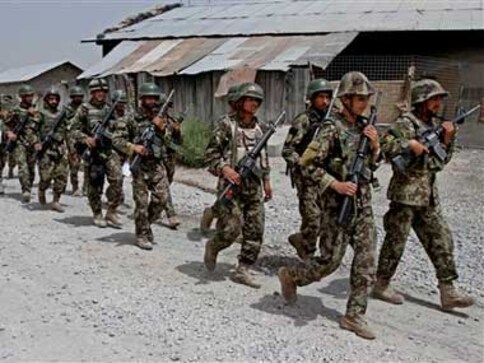
The short answer? corruption. The United States and its NATO
allies spent billions of dollars training and equipping Afghan security forces
over two decades, but the West-backed government was plagued by corruption.
Commanders exaggerated the number of soldiers to siphon off resources, and
troops in the field often lacked Ammunition, supplies, or even groceries. Their
morale was further eroded when it became clear that U.S. was leaving. As the
Taliban advanced rapidly in recent days, entire units surrendered after brief
fighting, and Kabul and some nearby provinces fell without a fight.
HOW IS THE INTERNATIONAL COMMUNITY REACTING TO THE TALIBAN?
The United States and all Western nations, as well as India,
closed their embassies in Kabul after the Taliban came to power in August.
Washington also froze around $ 9 billion in Afghanistan's central bank
balances, denying the country's Taliban rulers access to its foreign-currency
reserves. The United States and other Western officials say they want to see a
more inclusive government in Kabul that has women and different political
forces than the Taliban. They also want the Taliban to make it easier for the
Afghans who helped the United States coalition over the past two decades to
leave the country, and further evidence that the Taliban will sever all ties
with al-Qaeda. Although no country has officially recognized the Taliban
regime, nations such as China, Pakistan, Russia, Iran and Qatar have opened
their embassies in Kabul and started a dialogue with the new government. The
United States will thaw Afghan assets to avoid a humanitarian crisis. The
United Nations has raised $ 1 billion in emergency aid and sent several
high-level delegations to Kabul to meet with Taliban leaders.
WHAT DOES TALIBAN RULE MEAN FOR WOMEN?
The most significant change in Afghanistan since the Taliban came to power affects the lives of Afghan women. While the Taliban leaders say they committed to women's rights "in the light of Islam", in practice they have already taken various measures that severely restrict freedoms. that Afghan women have enjoyed over the past two decades. Women are not allowed in most government workplaces, and girls' middle and high schools remain closed. At private universities, female and male students return to school on different days, separated by gender. that women wear the veil that covers the head, but that they do not need a face veil or a burqa. In some parts of the country, but not in Kabul, Taliban authorities have also banned women from leaving their homes unless they are accompanied by a male family member.
WILL THE TALIBAN ONCE AGAIN HARBOR AL-QAIDA?
The Taliban have vowed to prevent Afghanistan from being
used as a base for attacks on other countries, a key US demand in the 2020
peace agreement. However, US military officials are concerned. Earlier this
year, Pentagon leaders said an extremist group like al-Qaeda could regenerate
in Afghanistan, and officials are now warning that such groups could grow much
faster than expected. On the other hand, technological advances over the past
20 years have allowed the United States to target suspected militants in
countries such as Yemen and Somalia, where they have no permanent troop
presence. 11 attacks and they are likely to hope to avoid recurrence as they
attempt to consolidate their rule. Afghanistan is also home to a group close to
the Islamic State that has carried out a wave of horrific attacks against its
Shiite minority in recent years. The Taliban have condemned such attacks and
the two groups have fought over the territory, but it remains to be seen
whether a Taliban government will be willing or able to suppress the Islamic
State.
WHAT WILL HAPPEN NEXT IN AFGHANISTAN?
It is unclear. The Taliban want to form an "inclusive Islamic government" with other factions. they are negotiating with high-ranking politicians, including leaders of the previous government. They have pledged to enforce Islamic law but encouraged women to join their government and said they would create a safe environment for people to return to normal after decades of war. But many Afghans distrust the Taliban and fear that their rule may be violent and oppressive. Afghans are also concerned about the security after thousands of prisoners were released and security forces disappeared as the Taliban advanced.
Great share
ReplyDeleteKnowledgable
ReplyDeleteNice work bro 😊
ReplyDeleteWow!
ReplyDeleteGood to know
ReplyDeleteVery well-written 👍
ReplyDelete